Guides
What to Serve With a Moroccan Tagine
Bread, salads, and the couscous question — how a tagine is actually served in Morocco, and how to build a table around one.
The Moroccan Cooks Kitchen
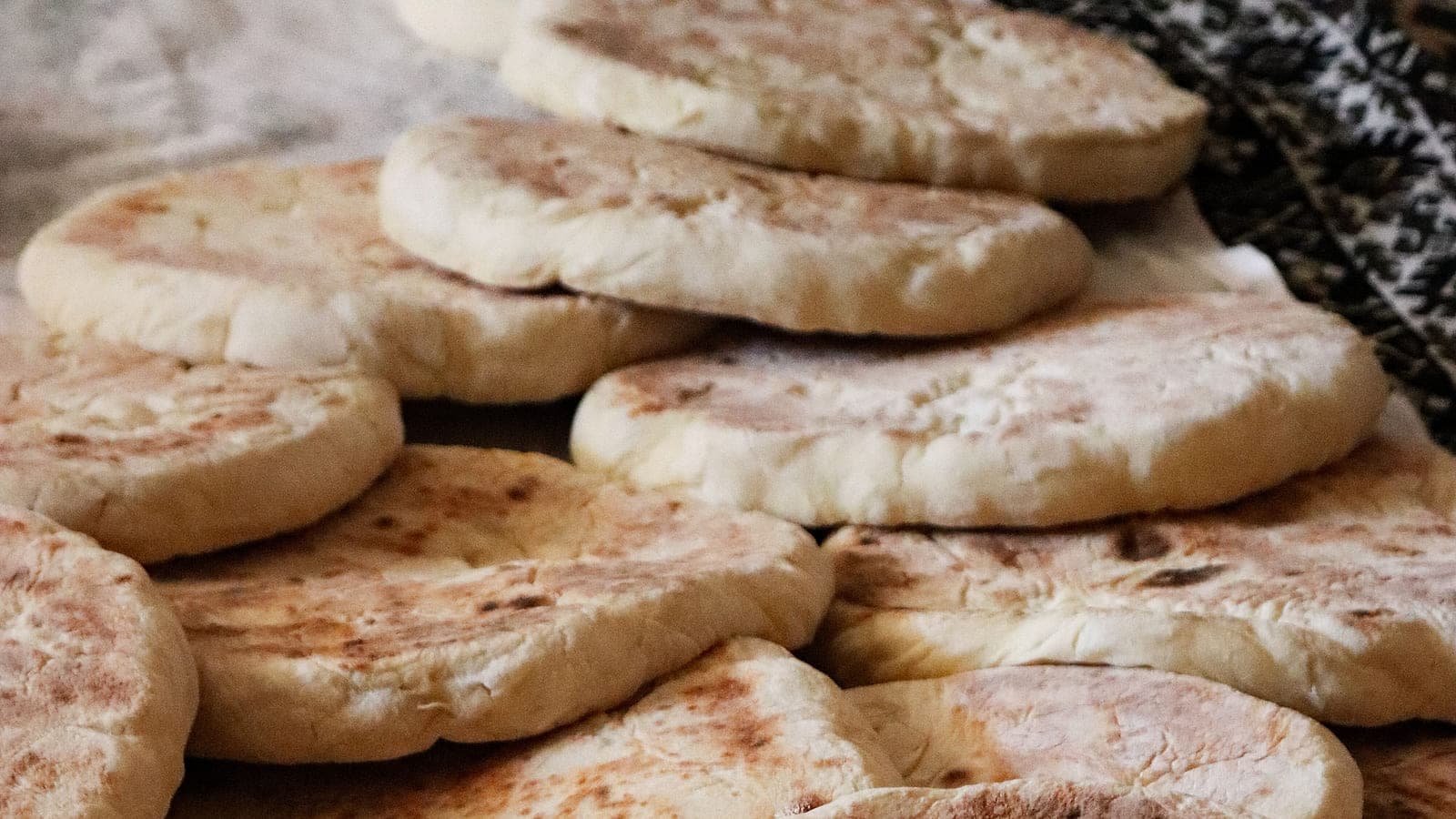
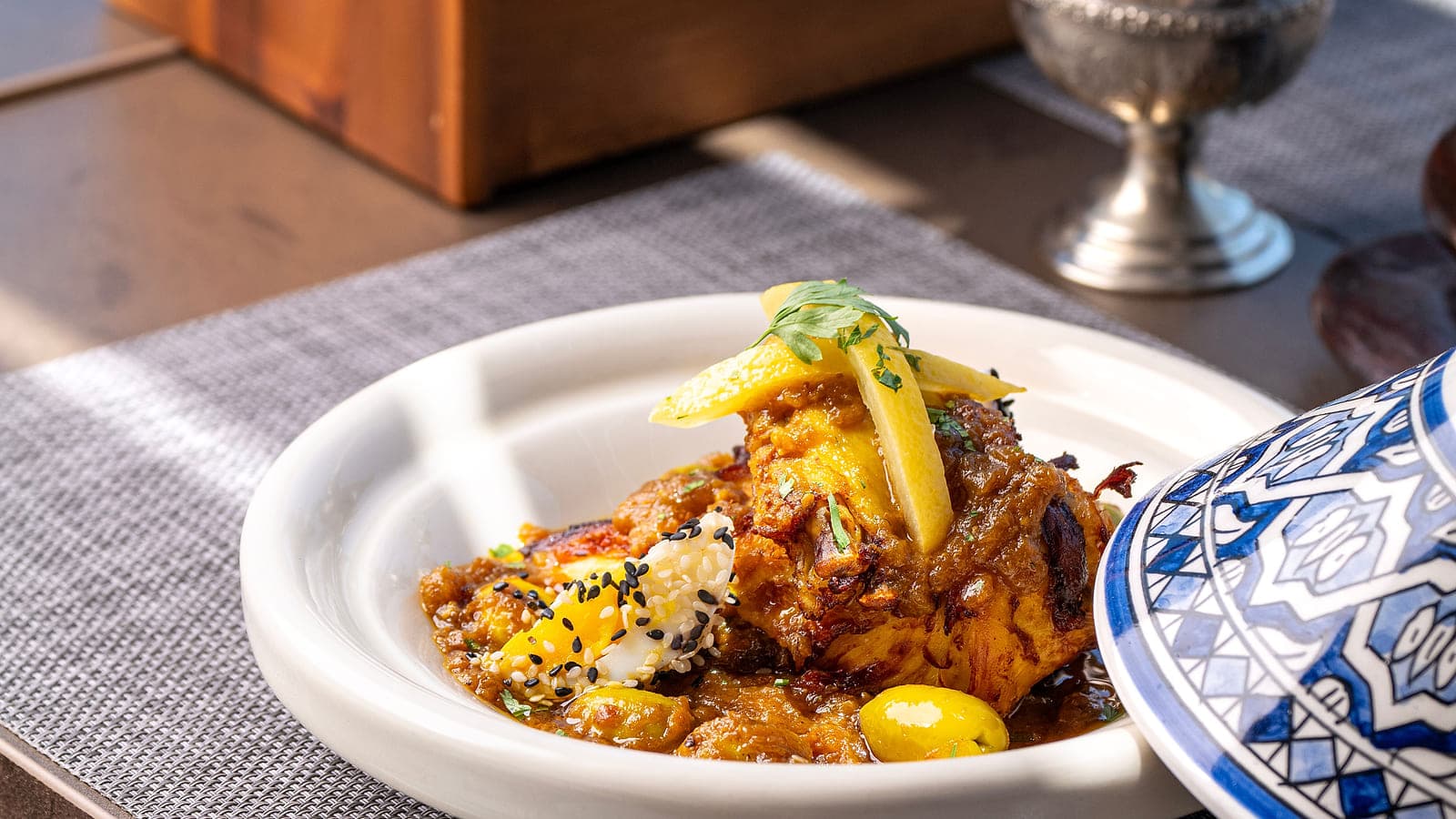
A tagine arrives at a Moroccan table almost bare. There is the pot in the middle, bread within reach of everyone, and usually a few small dishes of salad that were already there before the cooking finished. That is the whole meal. The question of what to serve alongside is really a question about how much room you leave for the sauce.
Bread is not optional
Khobz, the flat round semolina loaf, is how a tagine is eaten. You tear a piece, fold it into a scoop with your thumb, and lift meat and sauce with it. No forks, no plates in many homes — people eat from the tagine itself, each person working the wedge in front of them.
This changes how you should think about the sauce. A tagine reduced to a thick, glossy few spoonfuls is not a failure of quantity; it is the point. There should be enough to soak bread in, and not so much that the dish turns into a stew.
Cooked salads, served cold
Moroccan salads are mostly cooked, then cooled — vegetables softened down with garlic, cumin and olive oil until they are spreadable. They are made the day before, they improve overnight, and they do all the work of a starter without any last-minute cooking.
Three is the usual number on a table. Any more and they compete with the tagine; any fewer and the table looks thin. A good combination balances smoky, sweet and sharp:
- Zaalouk — aubergine and tomato cooked to a jam, smoky and rich. The one to include if you only make one.
- Taktouka — charred green pepper and tomato, softer and sweeter than zaalouk, and a good foil to a heavy meat tagine.
- Carrot salad — cooked carrots dressed warm with cumin, garlic and lemon. The sharp, bright one; it cuts through fat.
- Plain sliced tomato and onion with olive oil — the raw one, when the other two are both cooked.
The couscous question
Restaurants outside Morocco routinely serve tagine on a mound of couscous. It is worth knowing that this is not a Moroccan habit. Couscous is its own meal, with its own broth and its own vegetables, traditionally eaten after Friday prayers. Putting a tagine on top of it is a bit like serving a casserole on top of a risotto — two complete dishes competing for the same place on the plate.
If you want a starch other than bread, plain steamed couscous served on the side rather than underneath is the better compromise. But bread is what the dish was designed around.
What does not go on the table
- Rice. It is not part of the tradition and it dulls the sauce rather than carrying it.
- Green leaf salad with vinaigrette. The dressing fights the spices; Moroccan salads use lemon and cumin instead.
- A second hot dish. One tagine is the meal. Two crowd each other and neither gets eaten properly.
- Mint tea during the meal. It comes afterwards.
A menu for six
- The day before: make zaalouk and a carrot salad, and chill both. Buy or bake three rounds of khobz.
- That morning: prepare the tagine to the point where it goes on the heat.
- An hour before eating: start the tagine on a low flame and leave it alone.
- Put the salads and the bread on the table while the tagine finishes, and let people start on them.
- Bring the tagine to the table in its pot, lid on, and lift the lid in front of everyone. The steam is part of it.
- Clear, then make mint tea. Serve it with dates, chebakia or almond briouats.
Serving it in the pot
If you cooked in a clay tagine, serve in it. Clay holds heat for a long time, and the dish will still be hot at the bottom when people go back for a second round of bread. Put it on a wooden board or a folded cloth, never straight onto a cold stone or metal surface — the shock can crack the base.
Frequently asked questions
Do you serve couscous with a tagine?
How much bread do I need per person?
Can I serve a tagine as a starter?
What do you drink with a tagine?
Get Moroccan recipes in your inbox
New recipes, cooking tips and delicious ideas — one email a week.
Recipes from this article
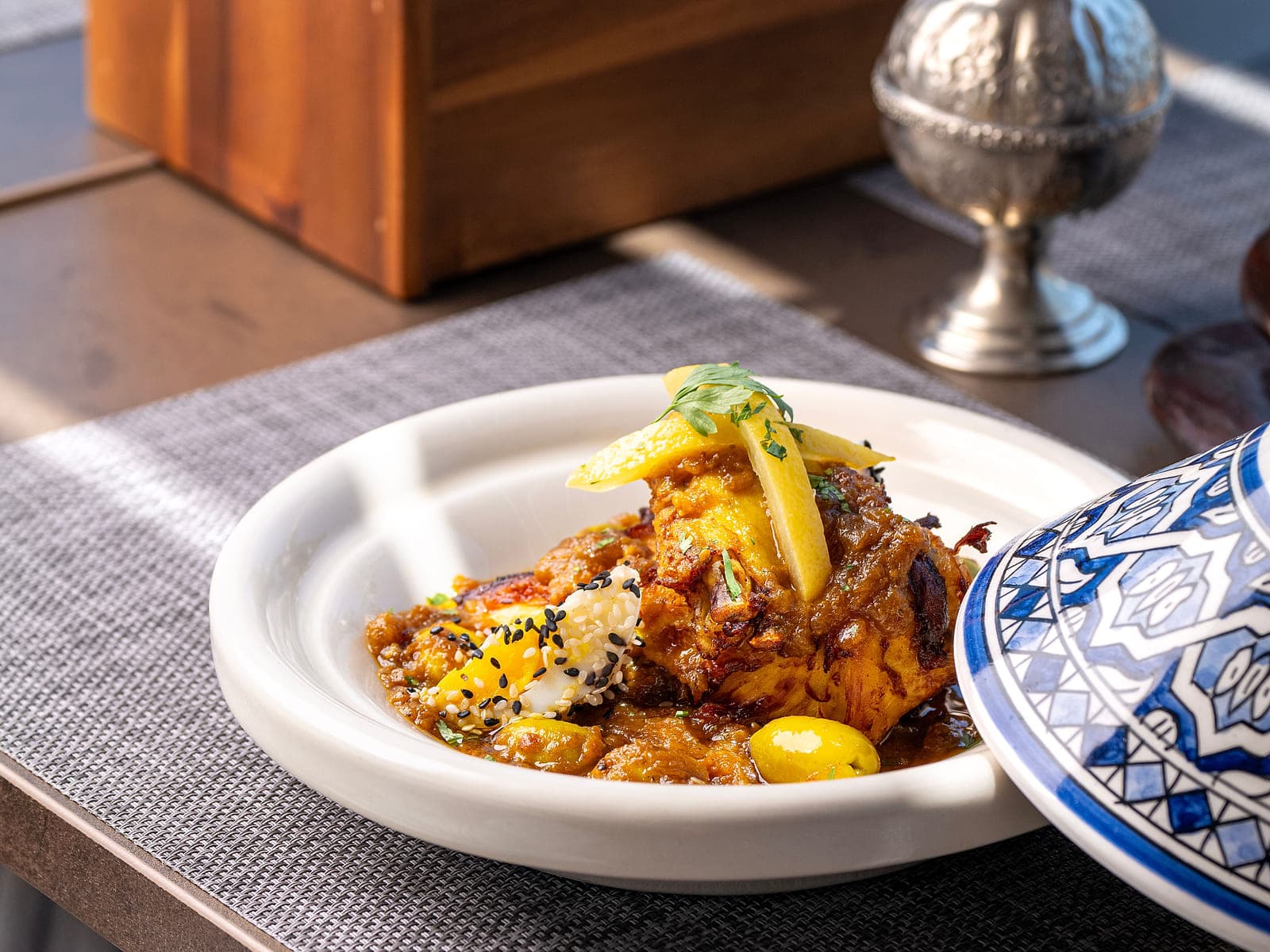
Moroccan Chicken Tagine with Preserved Lemon and Olives
Chicken slow-cooked with saffron, ginger, preserved lemon and green olives until the sauce turns golden and thick enough to scoop with bread.
Zaalouk — Moroccan Smoky Aubergine and Tomato Salad
Aubergine and tomato cooked down with garlic, cumin and paprika until jammy and smoky, served warm or cold with bread.
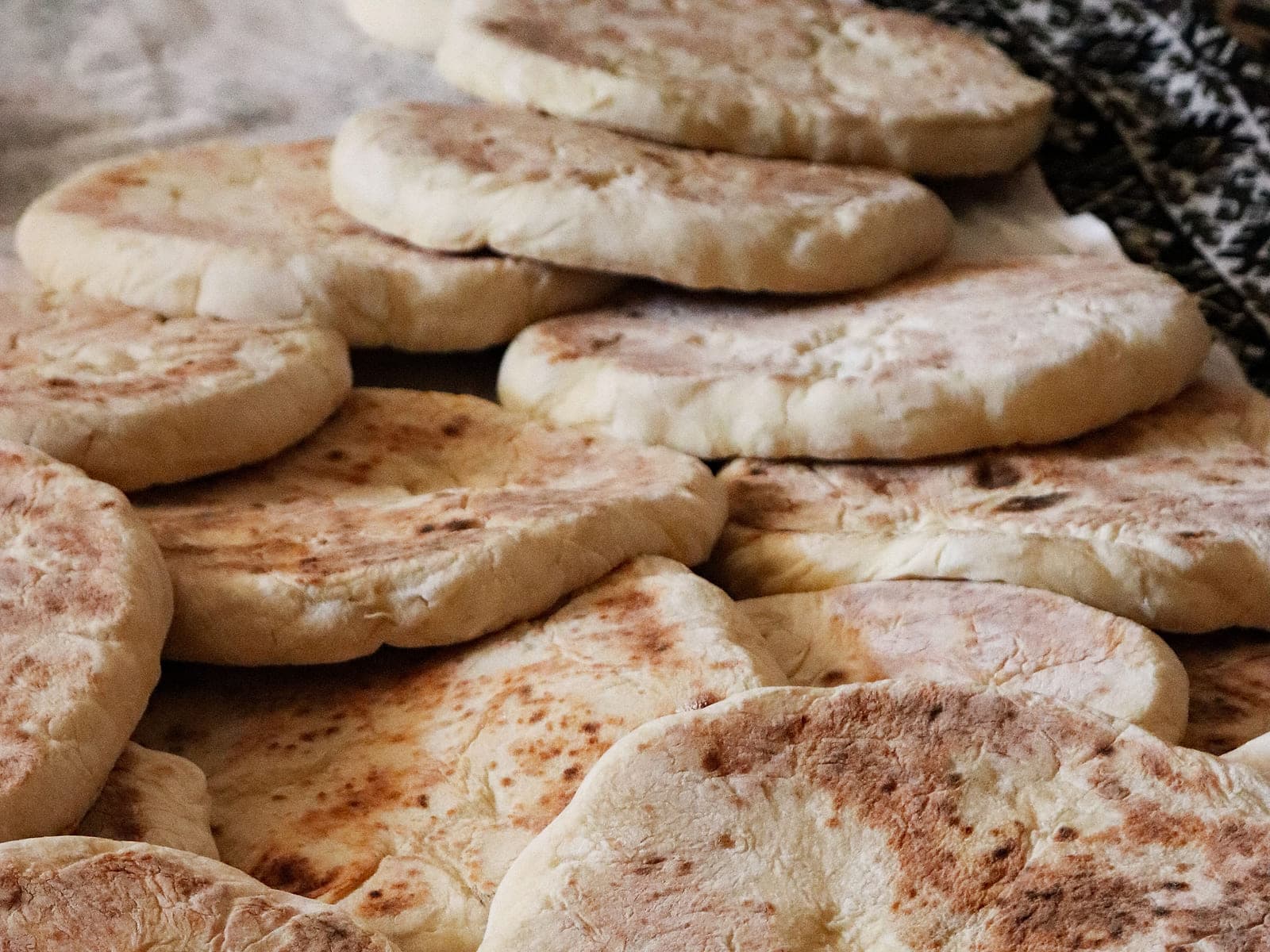
Khobz — Everyday Moroccan Bread
Round semolina and flour loaves baked flat and soft, the bread used as a fork at every Moroccan meal.
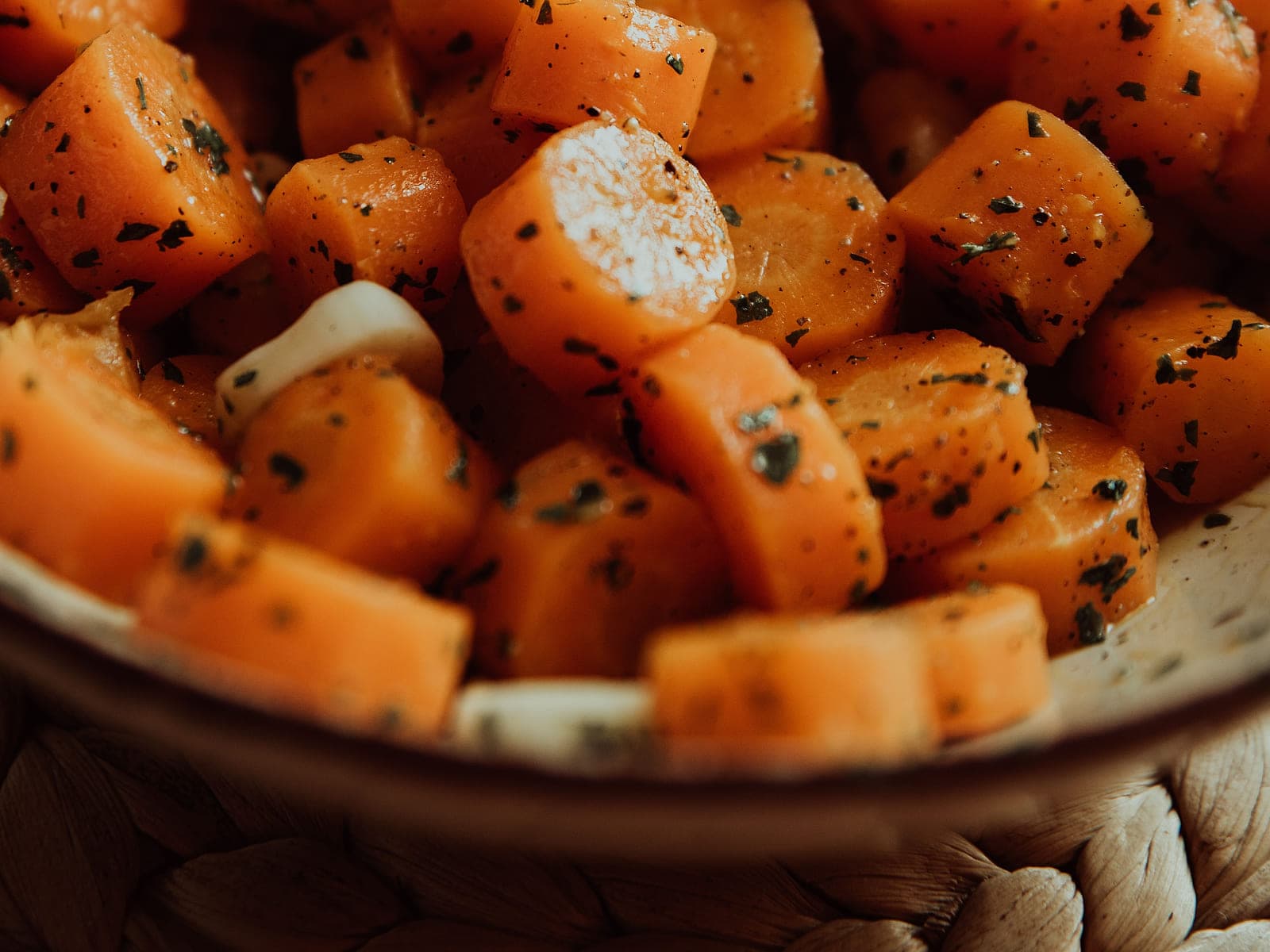
Moroccan Carrot Salad with Cumin and Garlic
Carrots barely softened, then dressed warm with garlic, cumin, paprika and lemon so they take up the flavour as they cool.
Keep reading

Guides
The Different Types of Moroccan Tagines
Mqalli, mhammer, mrouzia and the rest — the classic tagine styles, what separates them, and how to choose and use a clay tagine pot.
Moroccan Cuisine
What Makes Moroccan Cuisine Special?
Where Moroccan cooking came from, why sweet meets savoury so often, and the handful of techniques that shape almost every dish.