Khobz — Everyday Moroccan Bread, Whole Wheat with a Bran Crust
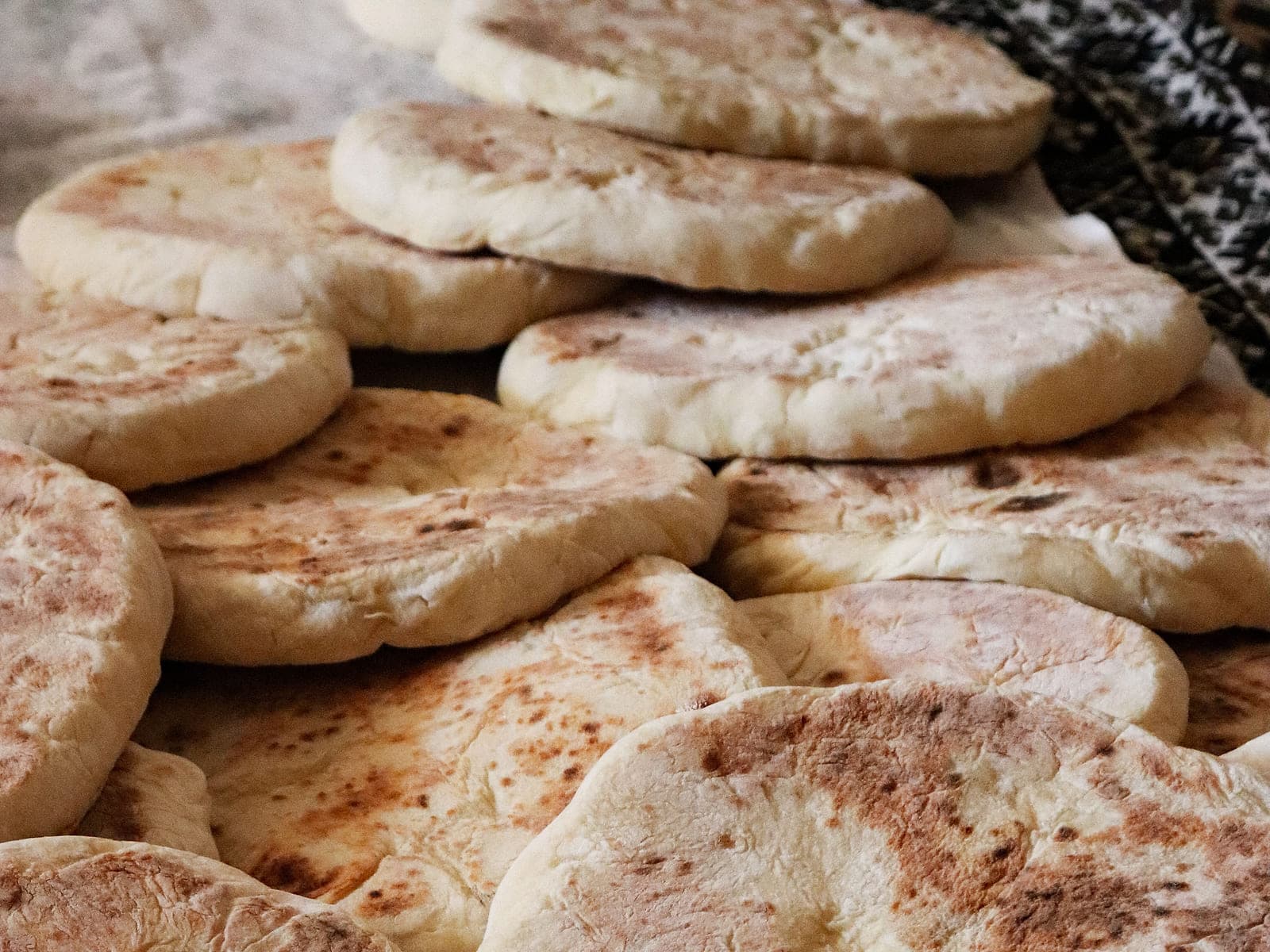
Round whole wheat loaves rolled in bran, given one short rise and baked flat in a home oven. The bread on every Moroccan table, used as a spoon for everything else.
- Prep
- 35 min
- Cook
- 25 min
- Total
- 1 hr
- Serves
- 8
- Difficulty
- Easy
Every Moroccan meal is eaten with khobz, and most of it is eaten with khobz in place of a fork. A piece is torn off, folded, and used to pick up tagine, scoop zaalouk, or wipe the last of the sauce from the plate. A table without bread on it is not set.
This is the version made at home, and it is plainer than the bakery loaf. Whole wheat flour, a little salt and sugar, yeast from the shop and warm water — kneaded by hand for five minutes, shaped into flat rounds, rolled in bran, and left just long enough to rise before it goes into the oven. There is no long first prove and no overnight anything. It is bread that gets made in the morning and eaten at lunch.
The bran on the outside is not decoration. It stops the dough sticking to the tray, it gives the crust its rough, toasted surface, and it is the thing you notice first when you tear one open.
One step matters more than it looks: the loaves are pricked with a fork before they bake. Skip it and they puff up into a hollow pitta instead of staying flat and soft enough to tear.
Ingredients
Makes 8 servings
The dough
For the crust
Instructions
Mix
Put the flour, salt, sugar and yeast in a wide bowl or gsaa and stir them together. Add the warm water a little at a time, working it in with your hand, until everything comes together into a soft dough. Whole wheat flour drinks more water than white, so you may need a splash more or a little less — stop when the dough is soft and slightly tacky but not sticking to your palm.
Knead five minutes
Knead by hand for about five minutes, pushing the dough away with the heel of your hand, folding it back and turning it. You are after a dough that is smooth and springs back slowly when you press it. It does not need to be kneaded any longer than that.
Shape two rounds
Divide the dough in two. Form each half into a smooth ball, then flatten it with your palm into a round about 2 cm thick and 20 cm across. Keep the edges as thick as the middle so the loaf bakes evenly.
Roll in bran
Scatter bran over a baking tray. Press each round into bran on both sides so the surface is covered, and lay them on the tray with space between them.
Let them rise
Cover the loaves with a clean cloth and leave them somewhere warm for about 20 minutes, until they have visibly puffed. Meanwhile heat the oven to 220°C.
Prick with a fork
Just before baking, prick each loaf a few times right through with a fork. This is what keeps khobz flat: without the holes, steam gets trapped in the middle and the bread balloons into a hollow pitta.
Bake
Bake for 20 to 25 minutes, until the crust is golden-brown and the loaves sound hollow when you tap the base. Ovens vary — check from 18 minutes.
Cool under a cloth
Wrap the loaves in a clean cloth as soon as they come out of the oven and let them cool inside it. The trapped steam keeps the crust soft enough to tear, which is how khobz is meant to be eaten.
Cook’s notes
- Prick the loaves before they bake. It is not decorative — skip it and they puff up hollow.
- Whole wheat flour absorbs more water than white flour, and every bag is different. Add the water gradually and go by feel rather than by the measurement.
- The bran does three jobs: it stops the dough sticking to the tray, it gives the crust its toasted roughness, and it makes the loaf easy to handle. Fine semolina works in its place if you have no bran.
- Cooling the bread wrapped in a cloth keeps the crust soft. Left uncovered on a rack, it dries and hardens.
- Khobz is at its best the day it is baked. Next day, warm it for a few minutes in a dry pan or the oven. It also freezes well — wrap each loaf and reheat from frozen.
- For a lighter loaf, replace half the whole wheat flour with white bread flour. The method does not change.
Recipe information
- Prep time
- 35 min
- Cook time
- 25 min
- Total time
- 1 hr
- Servings
- 8
- Calories
- 230 kcal per serving
- Cuisine
- Moroccan
- Course
- Bread
- Difficulty
- Easy
- Keywords
- khobz, moroccan bread recipe, moroccan khobz, moroccan whole wheat bread, moroccan flatbread
Nutrition is an estimate per serving, calculated from the ingredient list. Values vary with brands, cuts and portion size.
Frequently asked questions
Why do you prick khobz with a fork?
Can I make khobz with white flour?
What is the bran on top for?
Can I cook khobz in a pan?
How long does khobz keep?
More Moroccan recipes
Msemen — Moroccan Layered Flatbread
Squares of semolina dough stretched paper thin, folded with butter and pan-fried into flaky layers for breakfast with honey and tea.
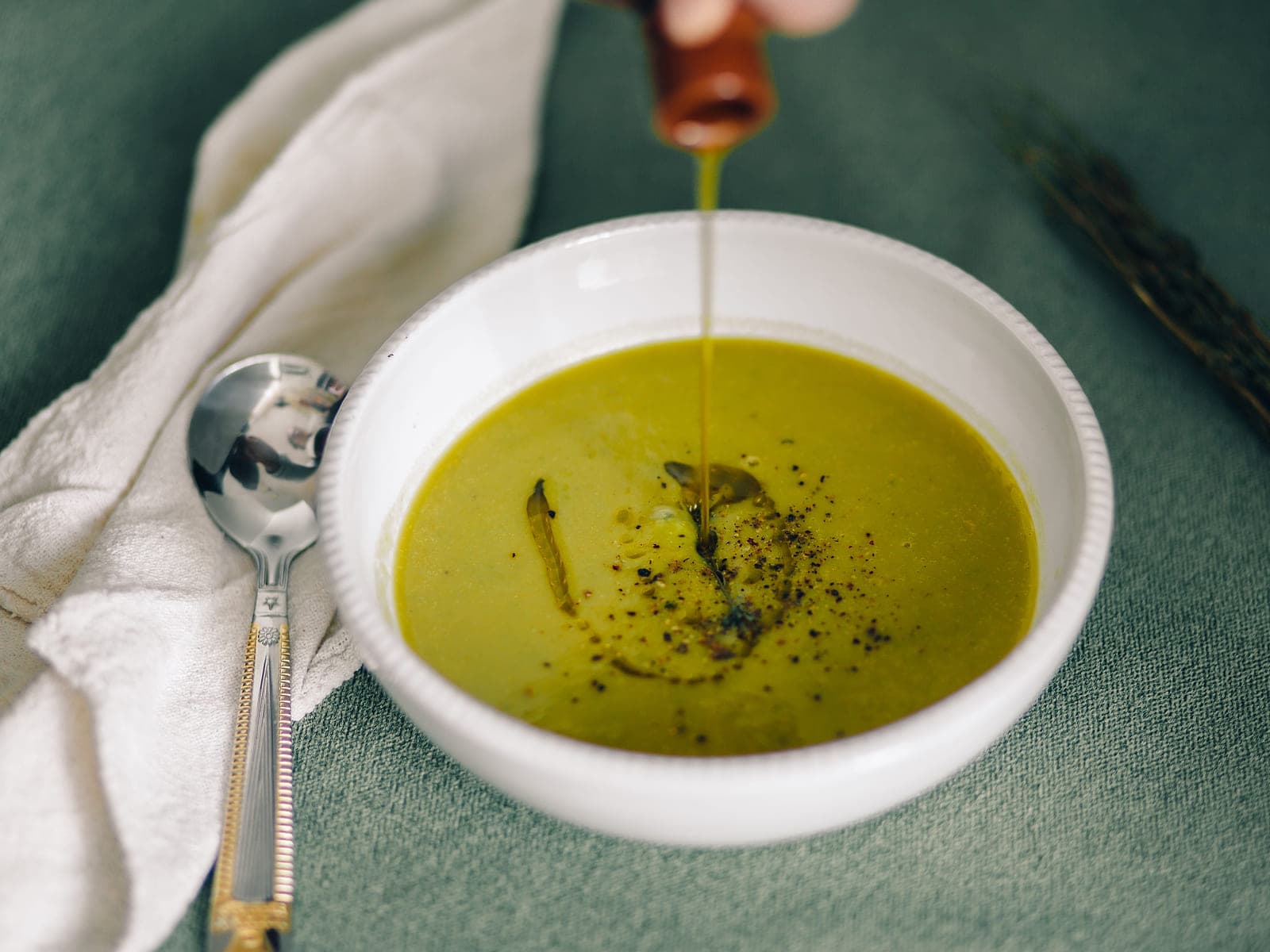
Bissara — Moroccan Split Fava Bean Soup
Dried fava beans cooked with garlic until they collapse, then blended smooth and finished at the table with olive oil, cumin and paprika. Morocco's winter breakfast.

Baghrir — Moroccan Thousand-Hole Pancakes
Light semolina pancakes cooked on one side only, covered in tiny holes that soak up melted butter and honey.
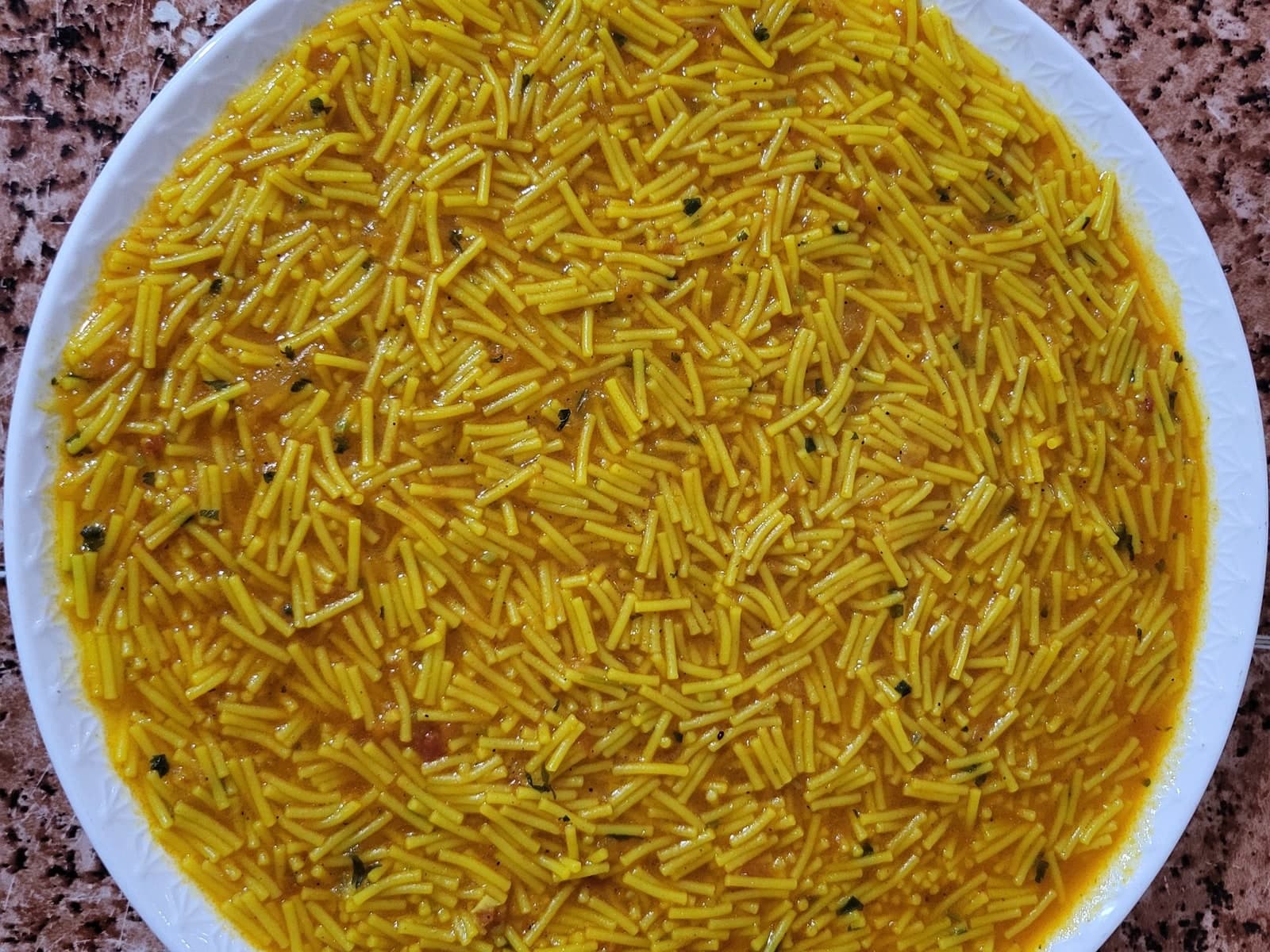
Chaariya bel Matisha — Moroccan Vermicelli in Tomato Sauce
Fine wheat vermicelli cooked straight in a tomato broth with turmeric, ginger and coriander until it drinks the lot. No meat, one pan, on the table in forty minutes.