Moroccan Tagines
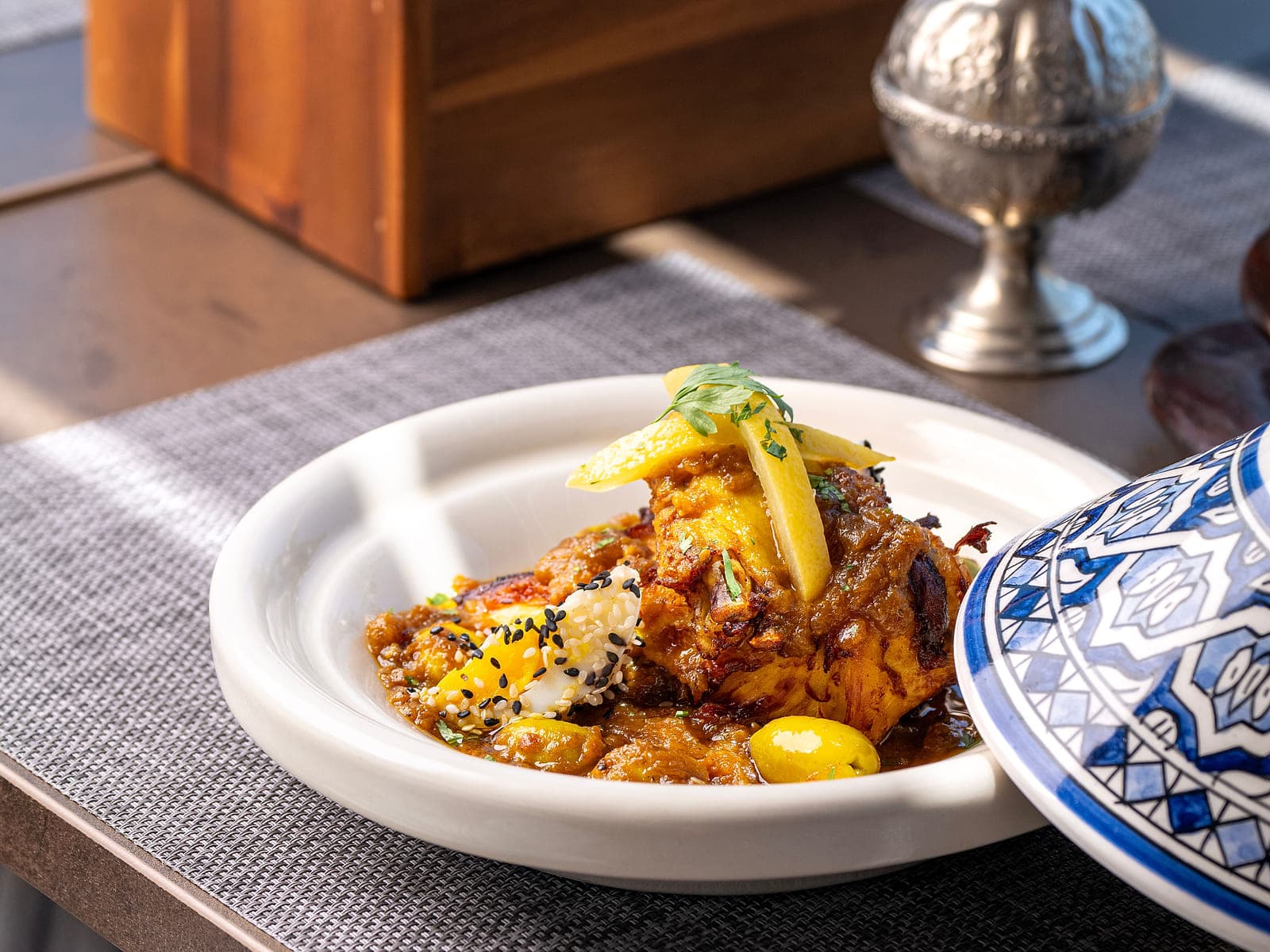
Moroccan Chicken Tagine with Preserved Lemon and Olives
Chicken slow-cooked with saffron, ginger, preserved lemon and green olives until the sauce turns golden and thick enough to scoop with bread.
95 minEasy
Four culinary traditions stacked on top of each other, a spice cupboard of seven jars, and a way of cooking built around sharing one dish. This is the short version of what Moroccan food is and where to begin.
Moroccan cooking is layered rather than blended. The Amazigh base supplies couscous, tagine cooking, olive oil and preserved foods. Arab arrivals from the seventh century onward brought spices, sugar, nuts, dried fruit and the pastry tradition. Andalusian refugees arriving after 1492 brought citrus, olives and a taste for elaborate composed dishes. The coasts supply fish, and the French protectorate left coffee and the café.
Three habits show up across dishes that otherwise have nothing in common. Heat is low and time is long, with very little added liquid, so sauces concentrate instead of dispersing. Sweetness is used deliberately against savoury — prunes with beef, icing sugar on a chicken pie — as a direct inheritance from medieval Arab-Andalusian cooking. And preserved ingredients such as preserved lemon, smen and olives are used for flavour rather than necessity.
Cumin, ground ginger, turmeric, sweet paprika, cinnamon, black pepper and saffron will carry you through nearly every recipe on this site. Chilli is usually served alongside as harissa rather than cooked in, which is why Moroccan food reads as warm and fragrant rather than hot.
Two jars complete the set: preserved lemons, used for the rind only, and a tube of harissa for the table.
Dishes arrive on shared platters and are eaten with bread from the section directly in front of you. That shapes the food itself: sauces need enough body to be picked up, meat needs to be soft enough to pull apart by hand, and small salads are served in multiples so everyone can reach several.
Cooking your first Moroccan meal?
Make zaalouk and a chicken tagine, buy the bread rather than baking it, and finish with mint tea. That is a complete table and nothing in it needs special equipment.
Chicken slow-cooked with saffron, ginger, preserved lemon and green olives until the sauce turns golden and thick enough to scoop with bread.
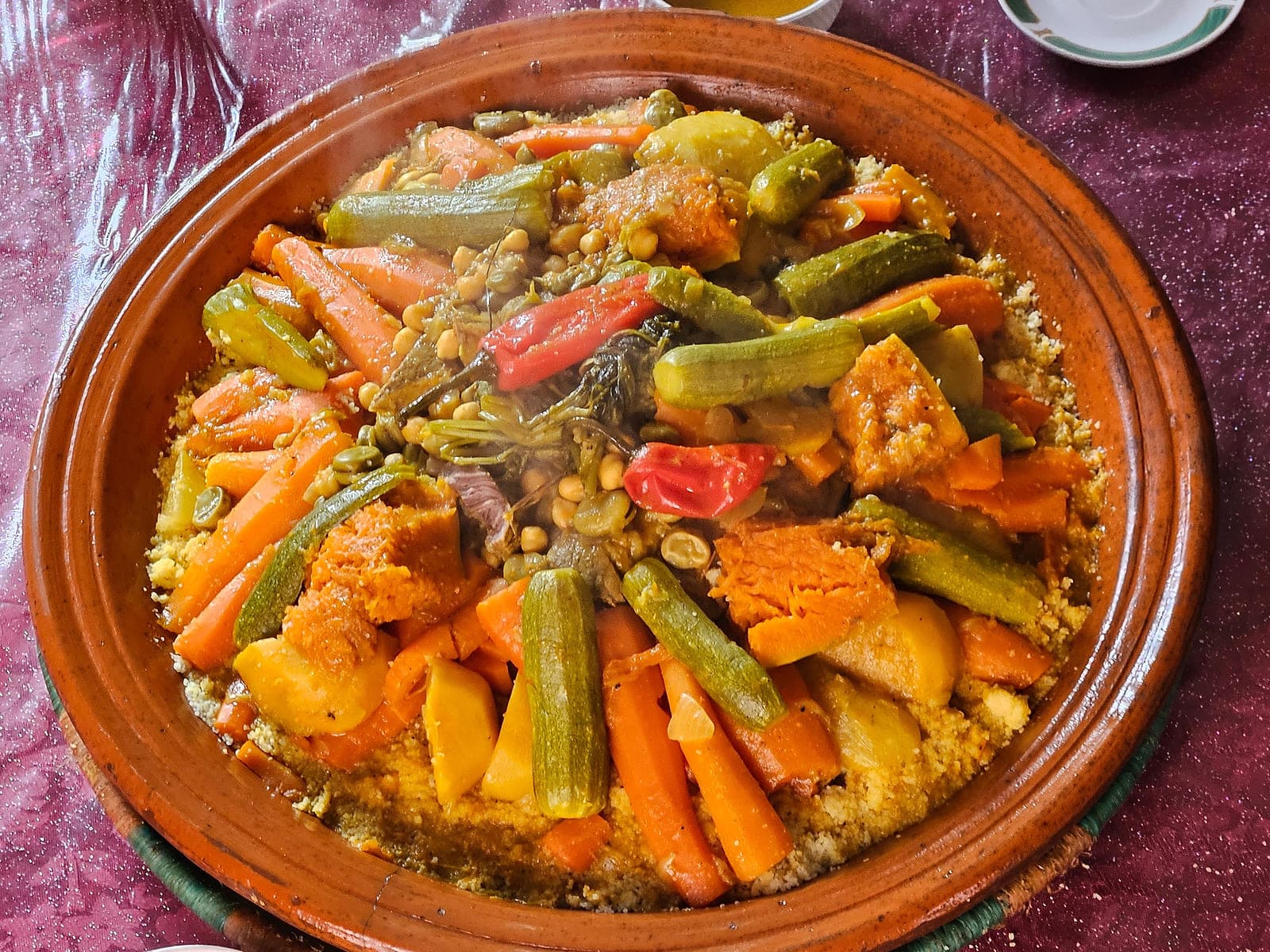
Semolina steamed three times over a saffron broth and served under a mound of carrots, turnips, pumpkin, courgette and chickpeas.
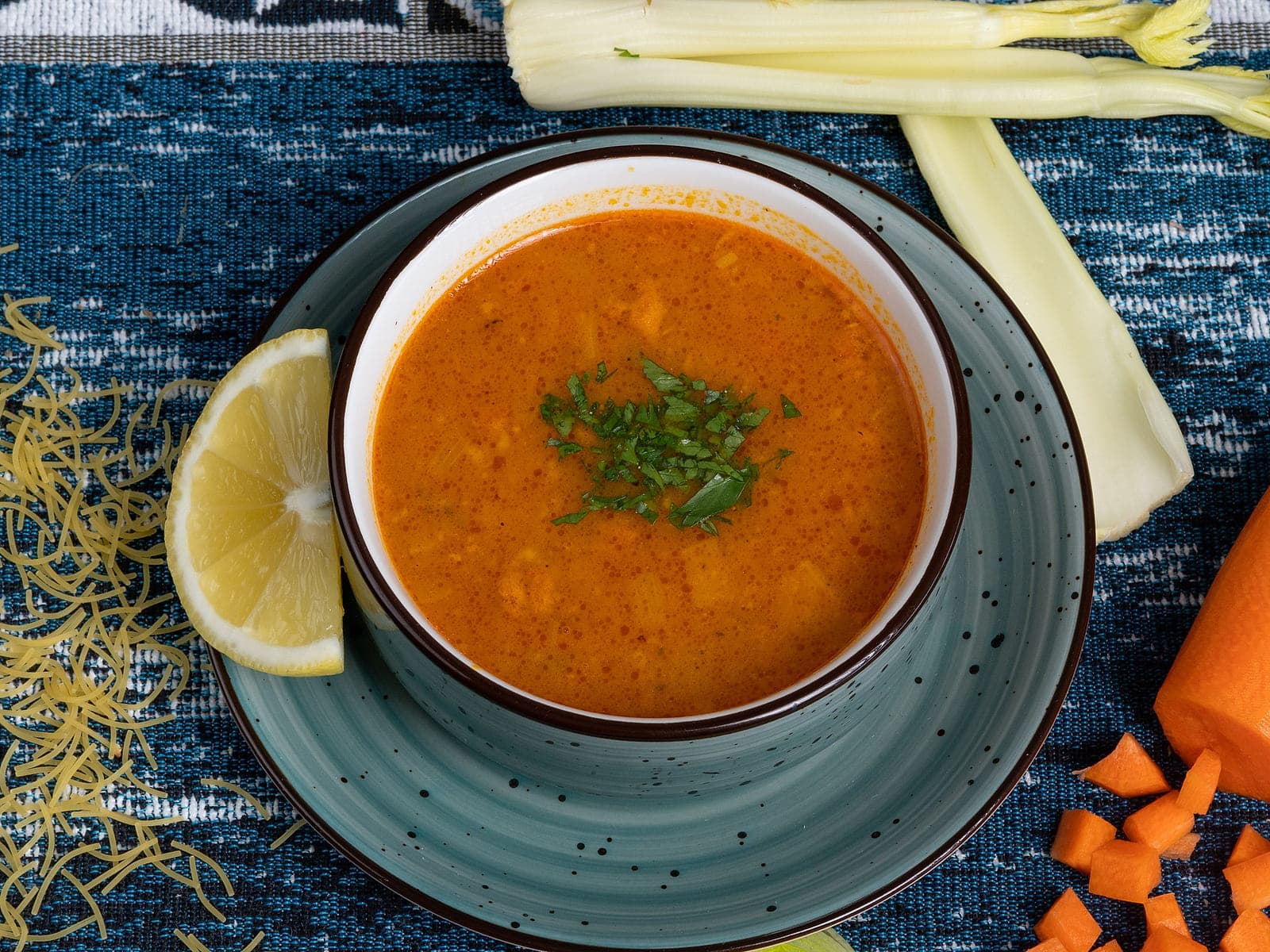
The soup that breaks the fast in Ramadan: tomato, lentils, chickpeas and lamb, thickened with a flour and water tedouira and finished with coriander.

Spiced shredded chicken, almond and egg wrapped in thin warqa pastry, baked until crisp and dusted with icing sugar and cinnamon.

Guides
What a Moroccan breakfast actually looks like, from weekday bread and olive oil to the full Friday spread — and how to put one together at home.

Guides
Mqalli, mhammer, mrouzia and the rest — the classic tagine styles, what separates them, and how to choose and use a clay tagine pot.

Guides
The method, the ritual and the common mistakes — why the leaves are rinsed, why the pour is made from a height, and why there are always three glasses.