Moroccan Fish Tagine with Chermoula — Tagine Hout
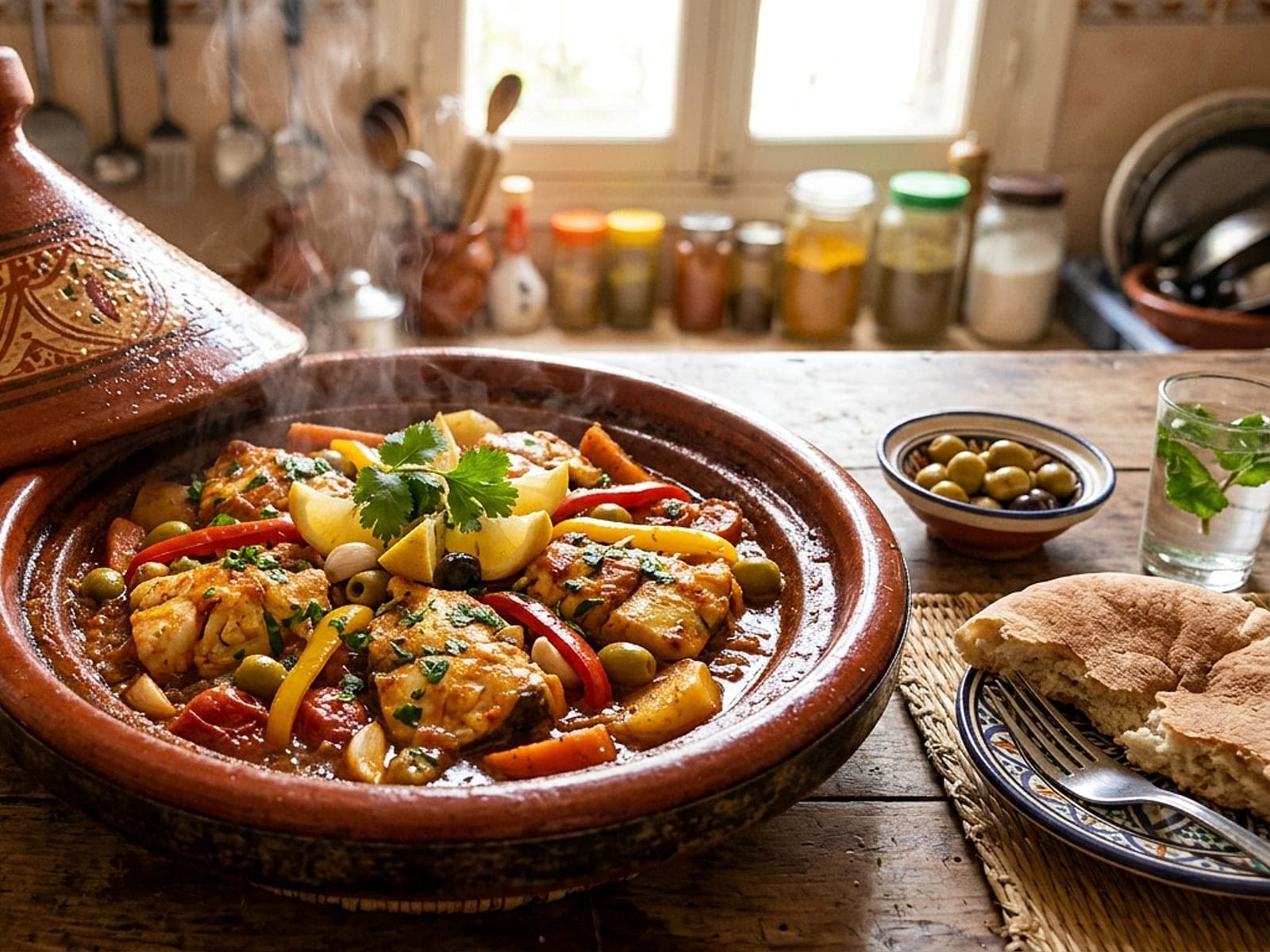
White fish marinated in chermoula and steamed over a raft of potatoes, tomatoes and peppers with preserved lemon and olives. Forty minutes, and the fish never touches the pot.
- Prep
- 25 min
- Cook
- 40 min
- Total
- 1 hr 5 min
- Serves
- 4
- Difficulty
- Easy
On the Atlantic coast — Essaouira, Safi, El Jadida — this is what a tagine means. Not lamb and prunes cooked for three hours, but firm white fish rubbed with chermoula and set over a bed of sliced potatoes and tomatoes, lidded, and left alone for forty minutes while the whole thing steams in its own juice.
One piece of technique carries the dish, and it is the reason the vegetables are arranged the way they are. The fish must never touch the base of the pot. Sliced potatoes go down first as a raft; everything else builds on top. The potatoes take the direct heat and turn sweet and soft, the fish above them cooks in steam rather than in oil, and nothing sticks or catches.
The second thing is restraint. No stirring, no flipping, and barely any added liquid — the tomatoes and the fish give up more than you expect. Every fish tagine that comes out dry has been opened and poked too often.
It is built on chermoula, so make that first. Everything after it is assembly.
Ingredients
Makes 4 servings
For the fish
Chermoula, if you are making it now
For the raft and the pot
To finish
Instructions
Make the chermoula
Mix the chopped herbs, garlic paste, cumin and paprika into a thick paste, then stir in the lemon juice and olive oil and season with the salt at the end. Rest it fifteen minutes. If you are using a jar made earlier in the week, bring it out of the fridge now so it is not fridge-cold when it meets the fish.
Marinate the fish — 30 minutes, no longer
Rub two thirds of the chermoula over the fish, getting it into every cut and under the skin. Cover and leave in the fridge for 30 minutes to an hour. Do not leave it overnight: the lemon juice firms the flesh the way it does in ceviche, and fish left in chermoula for hours comes out chalky and dense.
Build the raft
Pour the olive oil into the base of a tagine or a wide shallow pan. Lay the potato slices across the bottom in an overlapping layer, then the carrot batons across them. Season with the half teaspoon of salt. This layer is structural — it keeps the fish off the hot base, so leave no gaps.
Layer the vegetables
Spread half the sliced tomatoes over the potatoes, then the pepper strips. Spoon a little of the remaining chermoula over as you go, so the flavour is through the dish and not only on the fish.
Sit the fish on top
Arrange the marinated fish on the vegetables in a single layer, skin side up. Cover with the rest of the tomato slices, then scatter the preserved lemon and olives over. Spoon over whatever chermoula is left in the bowl.
Add the water and lid it
Pour the 100 ml of water down the side of the pot, not over the fish. Put the lid on, bring it to a gentle bubble over a medium-low heat, then leave it for 30 minutes. Do not lift the lid to check, and do not stir.
Finish uncovered
Take the lid off and give it 8 to 10 minutes more. The sauce will reduce and go glossy, and a knife should slide into the thickest part of the fish without resistance. If the potatoes are still firm at this point, put the lid back on for five minutes rather than turning the heat up.
Serve from the pot
Scatter the chopped coriander over, add the lemon wedges, and take the whole thing to the table. Bread, not rice — the sauce is the point, and it is eaten with khobz.
Cook’s notes
- The vegetable raft is not decorative. Fish laid straight onto the base of a hot tagine sticks, tears when you serve it, and scorches before the middle is done.
- 100 ml of water looks far too little. It is not. The tomatoes and the fish release a great deal of liquid, and the most common fault in this dish is a watery sauce that will not reduce.
- Slice the potatoes thin — 5 mm. Thicker and they are still hard when the fish is done, and there is no way to fix that without overcooking the fish.
- Firm fish only. Sea bream, sea bass, hake, cod, monkfish and conger all hold together. Delicate flaky fish such as plaice or sole will break apart into the vegetables.
- Prawns can go in for the last five minutes, on top. Any earlier and they turn to rubber.
- No preserved lemon? Use the rind of a fresh lemon simmered in salted water for fifteen minutes. Our guide to preserved lemons has the full method, and a jar is worth starting now for next time.
- It does not reheat well — fish never does. This is a dish to cook and eat, which is also how it is treated in Morocco.
What you need
Some links below are affiliate links. If you buy through one, we earn a small commission — the price you pay is exactly the same.
- Clay tagine pot (paid link)
Unglazed clay cooks differently from glazed, and a new clay tagine has to be seasoned before its first use. Check the base is flameproof if you plan to cook on a hob rather than in the oven.
- Fish spatula (paid link)
Wide, thin and slotted, so it slides under a cooked fillet and lifts it out in one piece. The usual reason a fish tagine arrives at the table in pieces is that it was served with a regular spoon.
- Mandoline slicer (paid link)
For even potato slices. A knife does the job perfectly well — this only makes it faster and more consistent, which matters when uneven slices mean some are still hard when the fish is done. Buy one with a guard and use it.
- Preserved lemons (paid link)
Ready-made, for when you have not got a jar going. Check the ingredients — it should be lemons, salt and water, nothing else. Making your own costs almost nothing and takes a month.
- Mortar and pestle (paid link)
Used for garlic, salt and whole spices. Heavier is better — a light mortar slides across the worktop. Stone or brass both work; wood absorbs garlic and holds onto it.
As an Amazon Associate we earn from qualifying purchases.
Recipe information
- Prep time
- 25 min
- Cook time
- 40 min
- Total time
- 1 hr 5 min
- Servings
- 4
- Calories
- 430 kcal per serving
- Cuisine
- Moroccan
- Course
- Main Dish
- Difficulty
- Easy
- Keywords
- moroccan fish tagine, tagine hout, fish tagine with chermoula, moroccan fish recipe, white fish tagine
Nutrition is an estimate per serving, calculated from the ingredient list. Values vary with brands, cuts and portion size.
Frequently asked questions
What fish is best for a Moroccan fish tagine?
Do I need a tagine pot?
How long should the fish marinate in chermoula?
Why is my fish tagine watery?
Can I make it ahead?
More Moroccan recipes

Moroccan Vegetable Tagine with Chickpeas
Root vegetables, chickpeas and apricots layered in a tagine with ginger, turmeric and preserved lemon, cooked until the sauce thickens around them.
Moroccan Chicken Tagine with Preserved Lemon and Olives
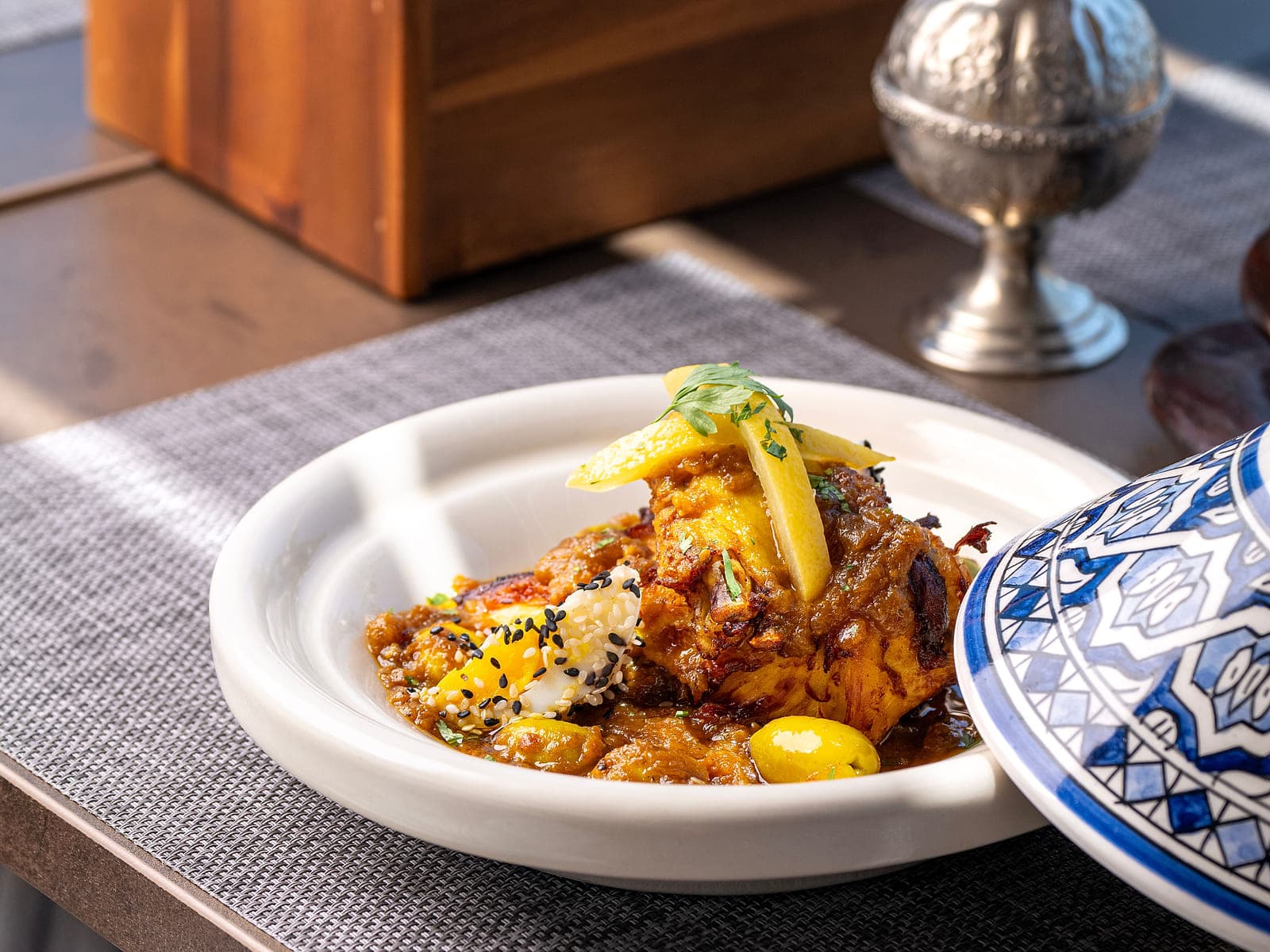
Chicken slow-cooked with saffron, ginger, preserved lemon and green olives until the sauce turns golden and thick enough to scoop with bread.
Kefta Mkaouara — Moroccan Meatball Tagine with Eggs
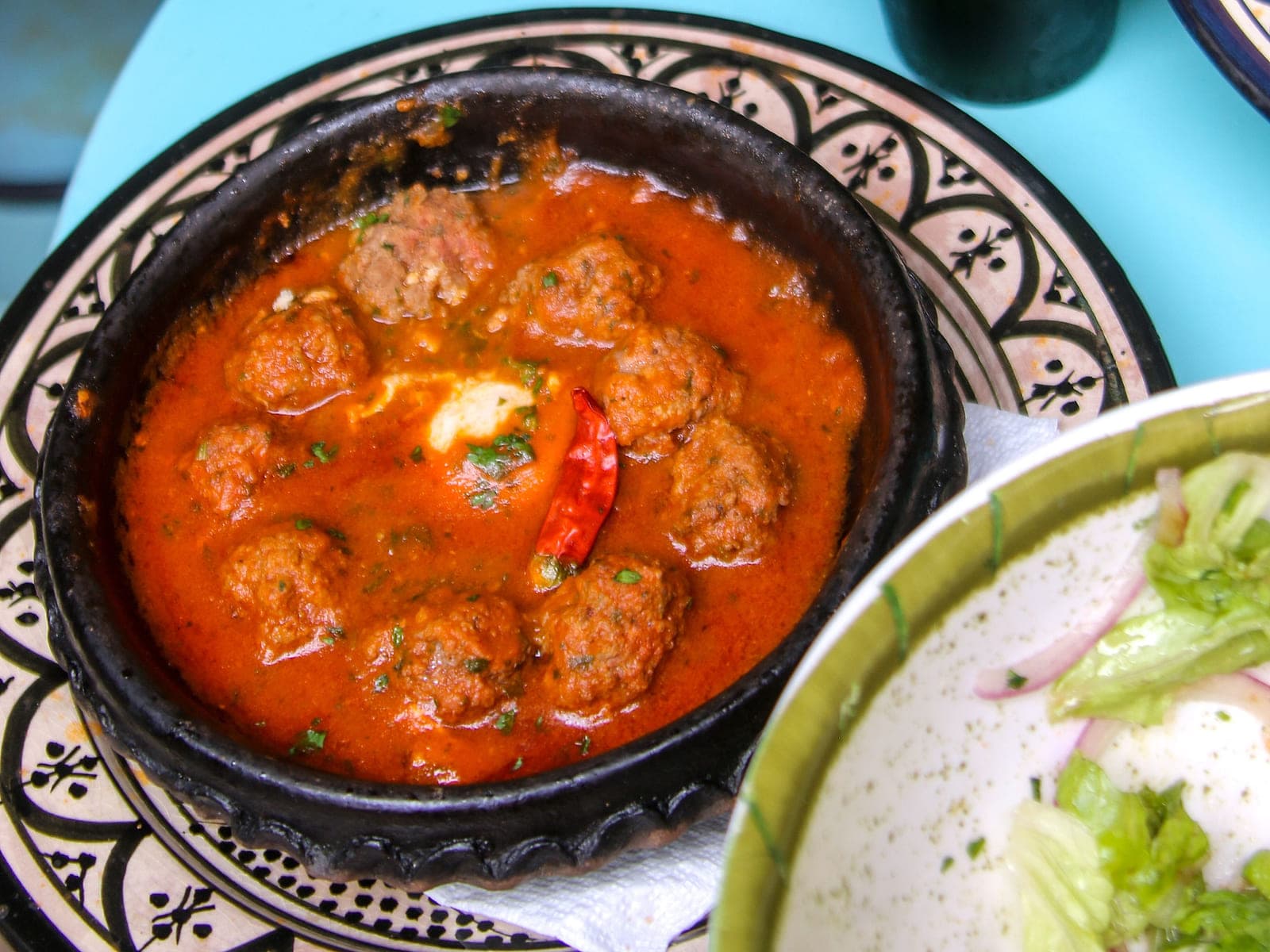
Spiced beef meatballs poached in a thick tomato and paprika sauce, with eggs cracked in at the end and left to set. Eaten straight from the pot with bread.

Beef Tagine with Prunes and Almonds
Beef slow-cooked with cinnamon and saffron until tender, finished with honeyed prunes, toasted almonds and sesame seeds.