Couscous with Kerdas and Kaddid — the Couscous of Kelaat Sraghna
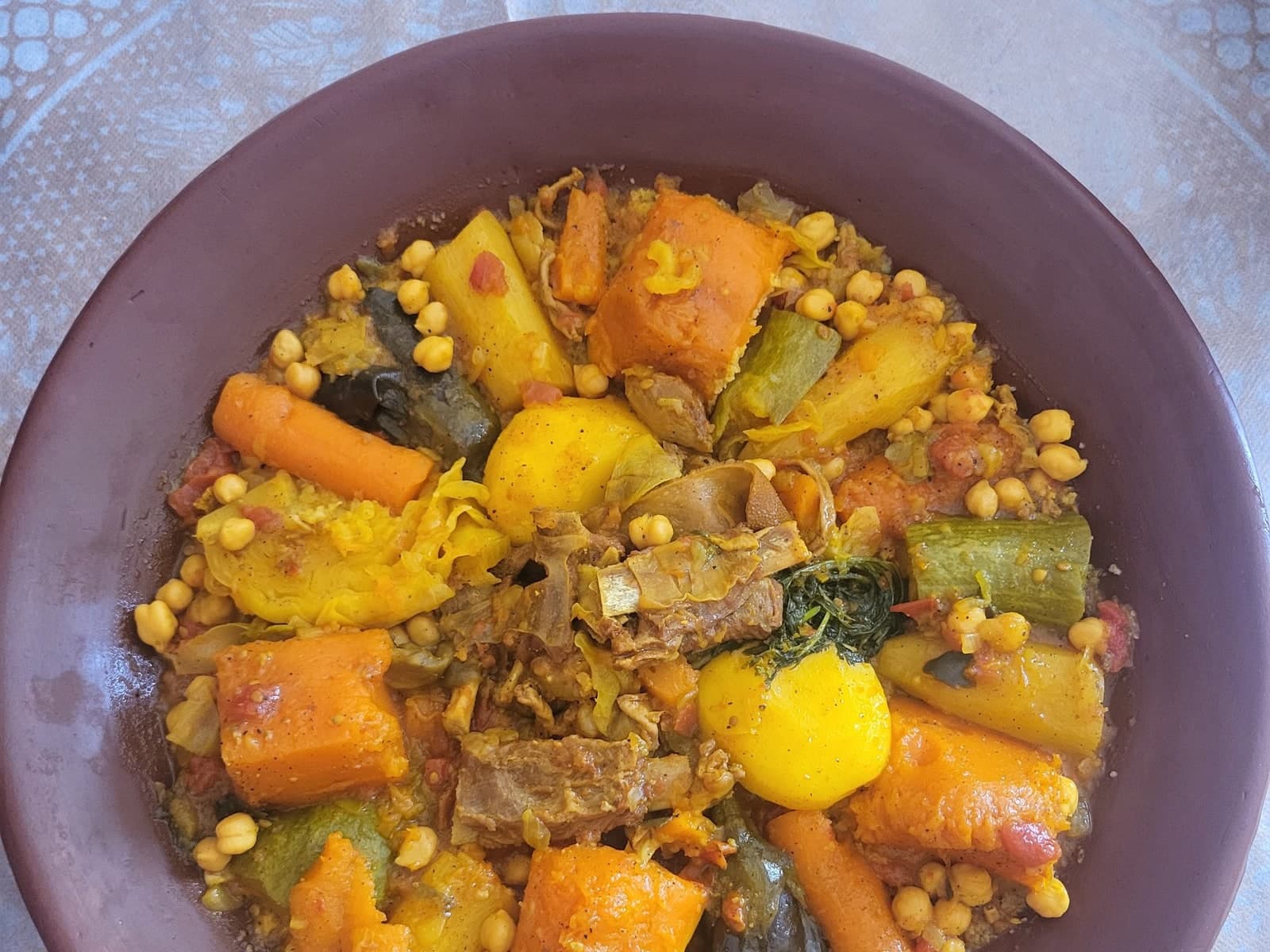
Dried salted meat and a stuffed stomach parcel, soaked until the salt lets go, then steamed over couscous with pumpkin, aubergine and chickpeas. Country cooking from the Haouz.
- Prep
- 40 min
- Cook
- 2 hr 30 min
- Total
- 3 hr 10 min
- Serves
- 4
- Difficulty
- Medium
This is not the couscous that gets photographed for restaurant menus. It is what the countryside around Kelaat Sraghna eats in winter, and the meat in it was preserved months earlier — kaddid, strips of lamb salted and dried in the sun, and kerdas, a parcel of stomach packed with lung and fat and hung up to dry alongside it.
Before refrigeration this was the whole point: a sheep slaughtered at Eid fed a family until spring, because the meat had been turned into something that keeps. Families still make it that way, and the flavour is the reason — dried meat gives a broth that fresh meat cannot, deeper and smokier, with a fat that carries right through the couscous underneath.
One step matters more than every other, and it is the first one. Kaddid and kerdas are preserved in salt, and they have to be soaked and boiled until the salt lets go before anything else happens. Skip it and the whole dish is inedible — not strongly seasoned, inedible.
The couscous itself is steamed three times, the same as any Moroccan couscous. Everything particular about this dish is in the pot underneath.
Ingredients
Makes 4 servings
The preserved meat
The broth
The vegetables
The couscous
Instructions
Take the salt out — do this first
Put the kerdas and the kaddid in a pot, cover generously with cold water, and bring to the boil. Let it bubble, then taste the water. It will be sharply salty. Pour it away, cover with fresh water, and boil again. Repeat until the water tastes of meat rather than of salt and the pieces have softened — usually two or three changes. This is the step that makes the dish possible, and it cannot be rushed or skipped.
Start the broth
Heat the oil in the base of the couscoussier. Add the grated onion, tomato, ginger, turmeric and pepper and turn it over for 5 minutes. Add the drained meat, the herb bunch and the soaked chickpeas, pour in the water, and bring to a simmer. Do not salt yet — taste at the end instead, because the meat will have brought some of its own.
Wet the couscous
Tip the couscous into a wide tray, sprinkle over the cold water, and rub it through with open fingers for a minute so every grain is damp and separate. Leave it 10 minutes to drink.
First steaming
Add the couscous loosely to the steamer basket, set it over the simmering broth, and seal the join between the two pots with a damp strip of cloth. Steam 15 minutes from the moment steam comes through the top.
Rake, rest, steam again
Tip the couscous back into the tray and break up every lump with a wooden spoon. Once it is cool enough to handle, work in the olive oil and a little salted water. Rest 10 minutes, return it to the basket, reseal and steam another 15 minutes.
The vegetables go in by cooking time
Add the carrots to the broth first and give them 15 minutes. Then the aubergine and the pumpkin. The courgettes go in last — they need about 15 minutes and turn to mush if they go in with the carrots.
Third steaming
Rake the couscous a final time, taste it for salt, and steam it 10 minutes more. By now the meat should pull apart easily and the broth should taste rounded rather than salty. Taste it properly before you add any salt at all.
Build the dish
Tip the couscous into a wide clay dish and spread it out. Lay the kerdas and the kaddid in the middle, then arrange the vegetables around them in a wheel — pumpkin, carrot, courgette, aubergine — and scatter the chickpeas over the whole thing.
Serve with the broth
Ladle some of the broth over the couscous just before it goes to the table, and put the rest in a bowl alongside for people to add as they eat. A dry couscous is the most common fault, and the broth is the fix.
Cook’s notes
- The desalting is not optional and not a matter of taste. Preserved meat carries enough salt to make a whole pot inedible, and no amount of extra vegetables will rescue it. Boil, taste, change the water, repeat.
- Do not salt the broth until the very end, if at all. Everything you need may already have come out of the meat.
- Kerdas and kaddid are sold in rural souks and at butchers in the Haouz, usually in the months after Eid al-Adha when the preserving is done. Outside Morocco, a North African butcher is the only realistic source.
- Khlii — the version preserved in fat rather than dried in the sun — can replace the kaddid. It is fattier and milder, and it needs less desalting, so taste the water after the first boil rather than assuming two or three changes.
- The pumpkin goes in with its skin on. It holds together through the cooking and comes apart on the plate.
- The full three-steaming method, including what to do without a couscoussier, is set out in our guide to steaming couscous.
- This is a winter dish, and deliberately so — preserved meat is what the larder held when nothing fresh was being slaughtered.
What you need
Some links below are affiliate links. If you buy through one, we earn a small commission — the price you pay is exactly the same.
- Couscoussier (paid link)
A two-part steamer for couscous. A metal colander over a stockpot does the same job, so this is a convenience rather than a requirement — buy one only if you steam couscous often.
- Medium couscous (paid link)
Plain medium couscous, not the instant kind, if you intend to steam it properly. Instant is pre-cooked and will not take three steamings.
As an Amazon Associate we earn from qualifying purchases.
Recipe information
- Prep time
- 40 min
- Cook time
- 2 hr 30 min
- Total time
- 3 hr 10 min
- Servings
- 4
- Calories
- 680 kcal per serving
- Cuisine
- Moroccan
- Course
- Main Dish
- Difficulty
- Medium
- Keywords
- couscous kerdas, kaddid couscous, moroccan preserved meat couscous, couscous bel kaddid, kelaat sraghna couscous
Nutrition is an estimate per serving, calculated from the ingredient list. Values vary with brands, cuts and portion size.
Frequently asked questions
What is kerdas?
What is the difference between kaddid and khlii?
Why does the meat have to be boiled and the water thrown away?
Can I make this with fresh meat instead?
Where is this version from?
More Moroccan recipes
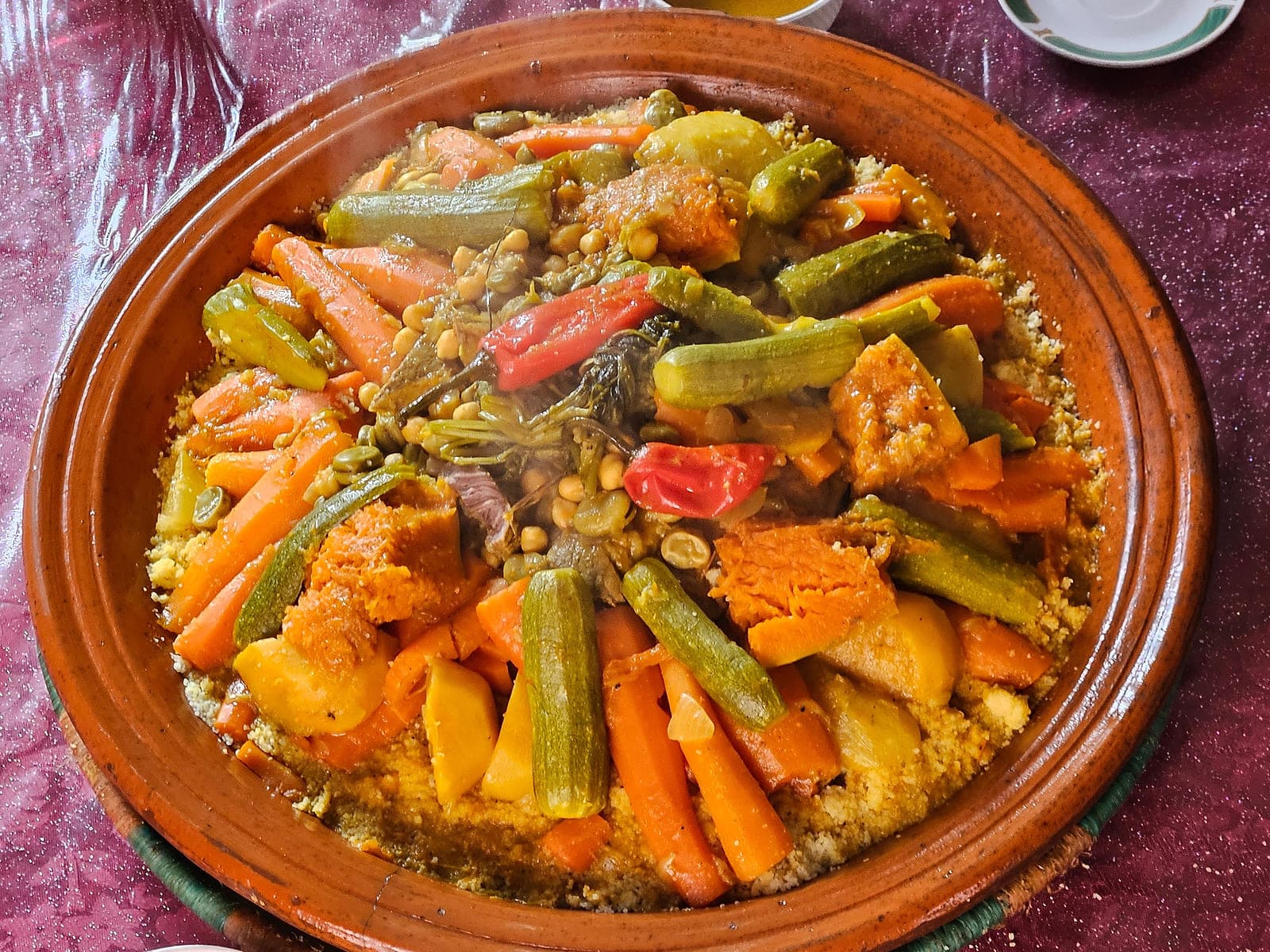
Traditional Moroccan Couscous with Seven Vegetables
Semolina steamed three times over a saffron broth and served under a mound of carrots, turnips, pumpkin, courgette and chickpeas.
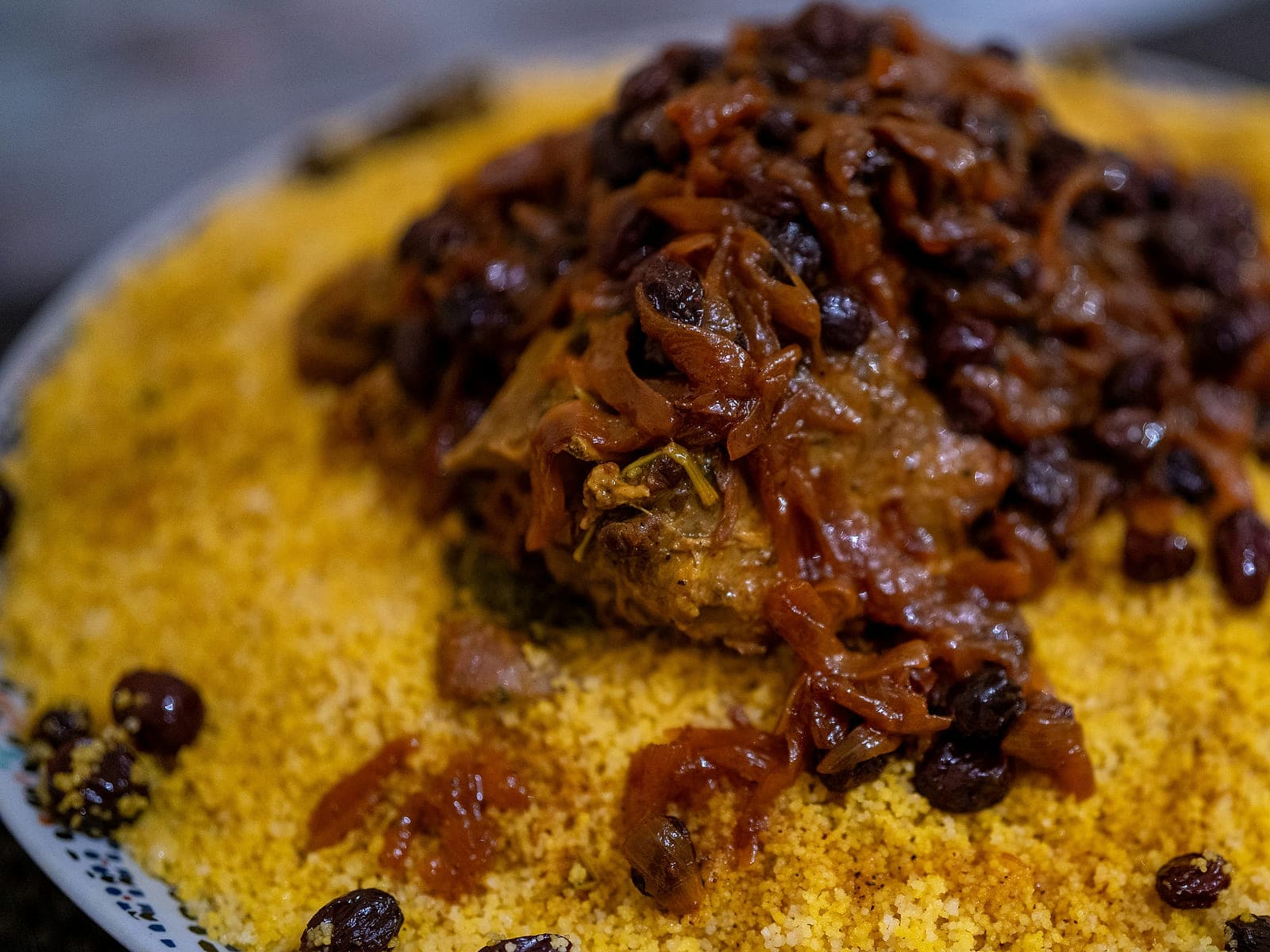
Couscous Tfaya — Moroccan Couscous with Caramelised Onions and Raisins
Steamed couscous under chicken and tfaya: onions cooked down for an hour with raisins, cinnamon and honey until dark and sweet. The celebration couscous.
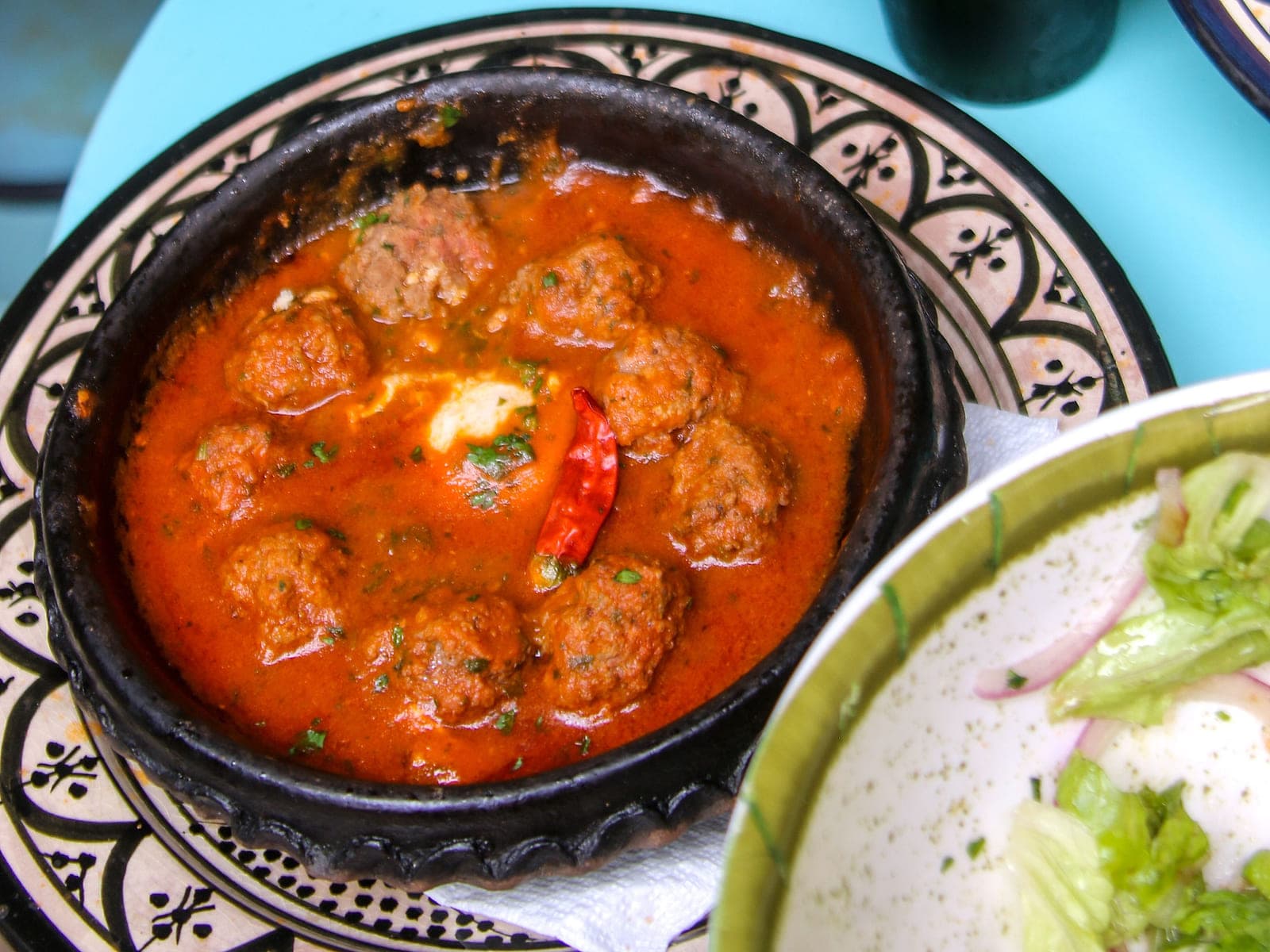
Kefta Mkaouara — Moroccan Meatball Tagine with Eggs
Spiced beef meatballs poached in a thick tomato and paprika sauce, with eggs cracked in at the end and left to set. Eaten straight from the pot with bread.
Beef Tagine with Prunes and Almonds
Beef slow-cooked with cinnamon and saffron until tender, finished with honeyed prunes, toasted almonds and sesame seeds.