Techniques
How to Steam Couscous the Traditional Way
Why the instructions on the box give you paste, and how three rounds of steaming turn the same semolina into separate, light grains.
The Moroccan Cooks Kitchen
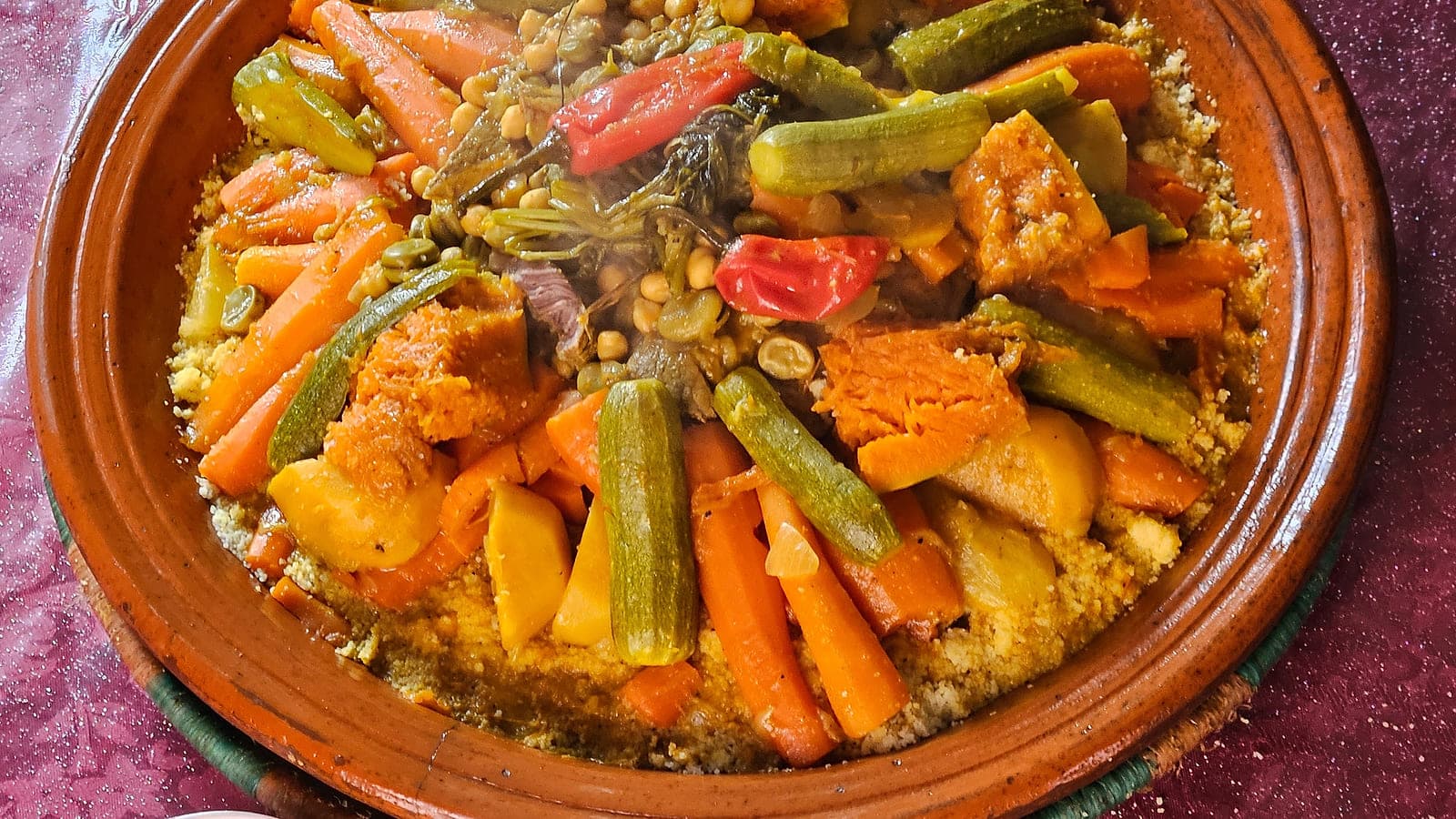
Couscous is not a grain. It is tiny pellets of semolina rolled with water, which means it is closer to pasta than to rice — and like pasta, everything depends on how it meets the water. Moroccan cooks steam it three times over broth, raking and oiling it between each round. The instructions on the packet tell you to pour boiling water over it and wait five minutes. The two methods produce two different foods.
Why the packet method fails
When you drown couscous in water, every grain absorbs at once, swells at once, and then sits in whatever liquid is left. The outsides turn soft before the insides finish, and the starch that leaches out glues the grains to each other. What you get is a damp block that has to be broken up with a fork.
Steam behaves differently. Vapour rises through the couscous, condenses on the outside of each pellet and is drawn slowly inward. Nothing sits in liquid. The grains swell, dry slightly in the heat, then swell again on the next round — and they stay individual, which is the whole point.
The equipment
A couscoussier is two pots: a wide bottom for the broth and a perforated top that nests into it. Any equivalent works, as long as three things are true.
- The couscous never touches the liquid. Leave a good hand's width of air between the broth and the base of the basket.
- Steam cannot escape at the join. A gap there means the steam takes the easy route out and never passes through the grain.
- The lid fits, but not tightly — some steam needs to leave, or condensation drips back and wets the top layer.
- The basket is wide. A deep narrow one packs the couscous too thickly for steam to reach the middle.
Sealing the join
In Morocco the gap between the two pots is sealed with a strip of cloth soaked in a flour-and-water paste, wound around the join. Cling film pressed around the outside does the same job, as does a long strip of damp tea towel tucked in. It looks fussy and it is the single step that most changes the result — steam that escapes at the seam is steam that never cooked anything.
The three steamings
- Wet the grain. Tip the dry couscous into a wide bowl or tray. Sprinkle over cold water — about 150 ml for every 500 g — and rub it through with open fingers for a minute, lifting and separating. Leave it ten minutes to drink.
- First steaming. Add it to the basket in handfuls, loosely, never pressed down. Set it over the simmering broth, seal the join, and steam uncovered for fifteen minutes from when steam first rises through the top.
- Rake and rest. Tip it back into the tray. It will be lumpy and hot. Break it up with a wooden spoon, then work in a little salted water and a spoonful of oil or butter with your hands once it is cool enough. Leave ten minutes.
- Second steaming. Return it to the basket, reseal, and steam another fifteen minutes. This is the round that does most of the cooking.
- Rake again. Same again — break up, separate, taste for salt. The grains should be nearly done, tender with the faintest firmness.
- Third steaming. Ten minutes more. Finish with butter or smen worked through while it is hot, then pile it into a mound to serve.
How to tell it is right
Take a pinch and roll it between your fingers. The grains should come apart individually and feel dry on the outside while being tender all the way through. If they mash, there was too much water somewhere. If the centres are still chalky, it needs another round — and another round never hurts. Moroccan cooks often steam four or five times without anyone calling it overdone.
Without a couscoussier
A metal colander over a stockpot works, provided the colander sits well above the water and you seal the join. Line it with muslin if the holes are large enough for grains to fall through. A bamboo steamer over a wok is fine too. What does not work is a saucepan with a tight lid and water in the bottom — the couscous sits in the condensation and you are back to the packet method by another route.
Frequently asked questions
Can I just pour boiling water over couscous?
Do I need a couscoussier?
Is instant couscous the same thing?
How far ahead can I steam couscous?
Get Moroccan recipes in your inbox
New recipes, cooking tips and delicious ideas — one email a week.
Recipes from this article
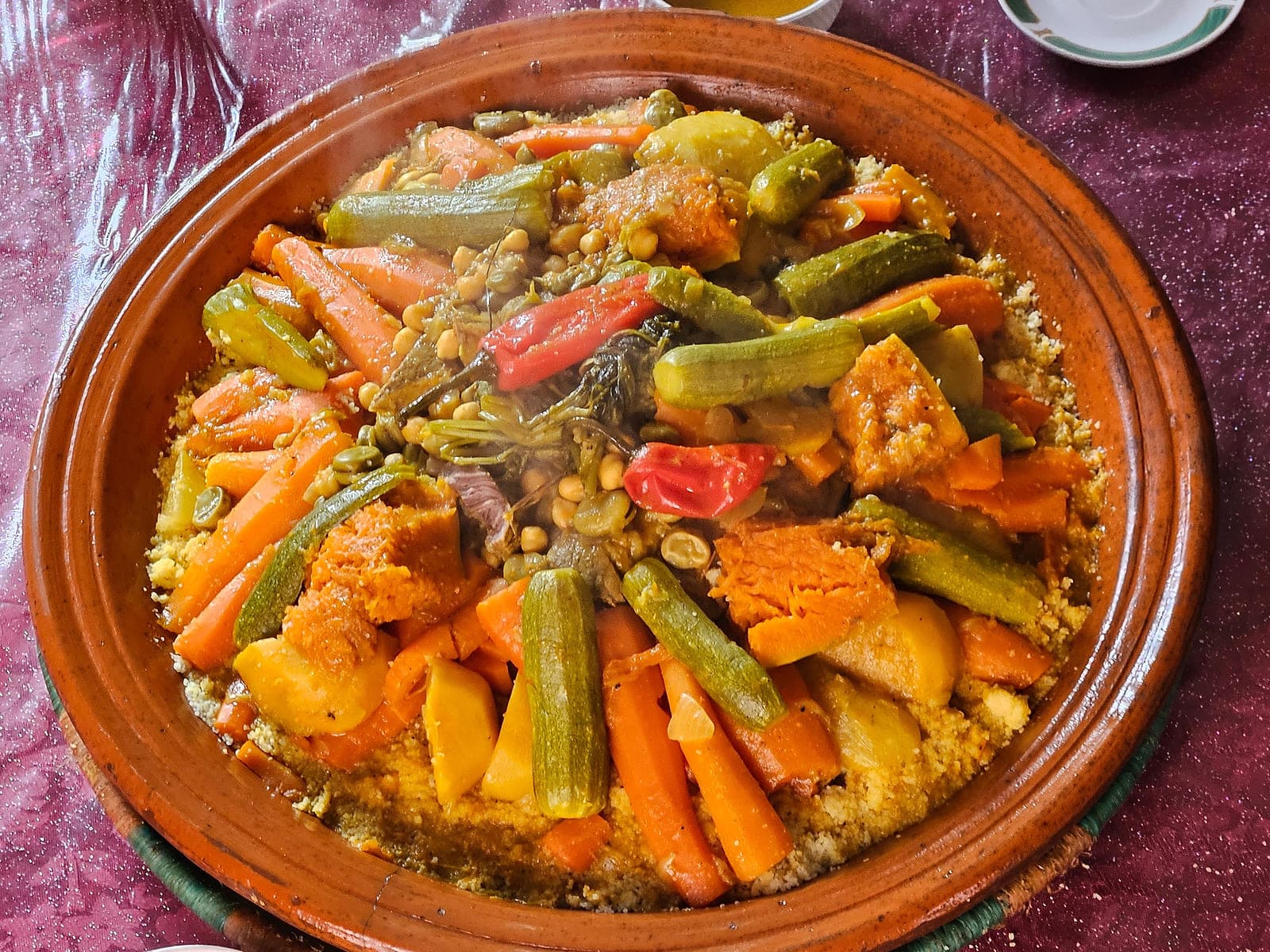
Traditional Moroccan Couscous with Seven Vegetables
Semolina steamed three times over a saffron broth and served under a mound of carrots, turnips, pumpkin, courgette and chickpeas.

Moroccan Vegetable Tagine with Chickpeas
Root vegetables, chickpeas and apricots layered in a tagine with ginger, turmeric and preserved lemon, cooked until the sauce thickens around them.
Keep reading
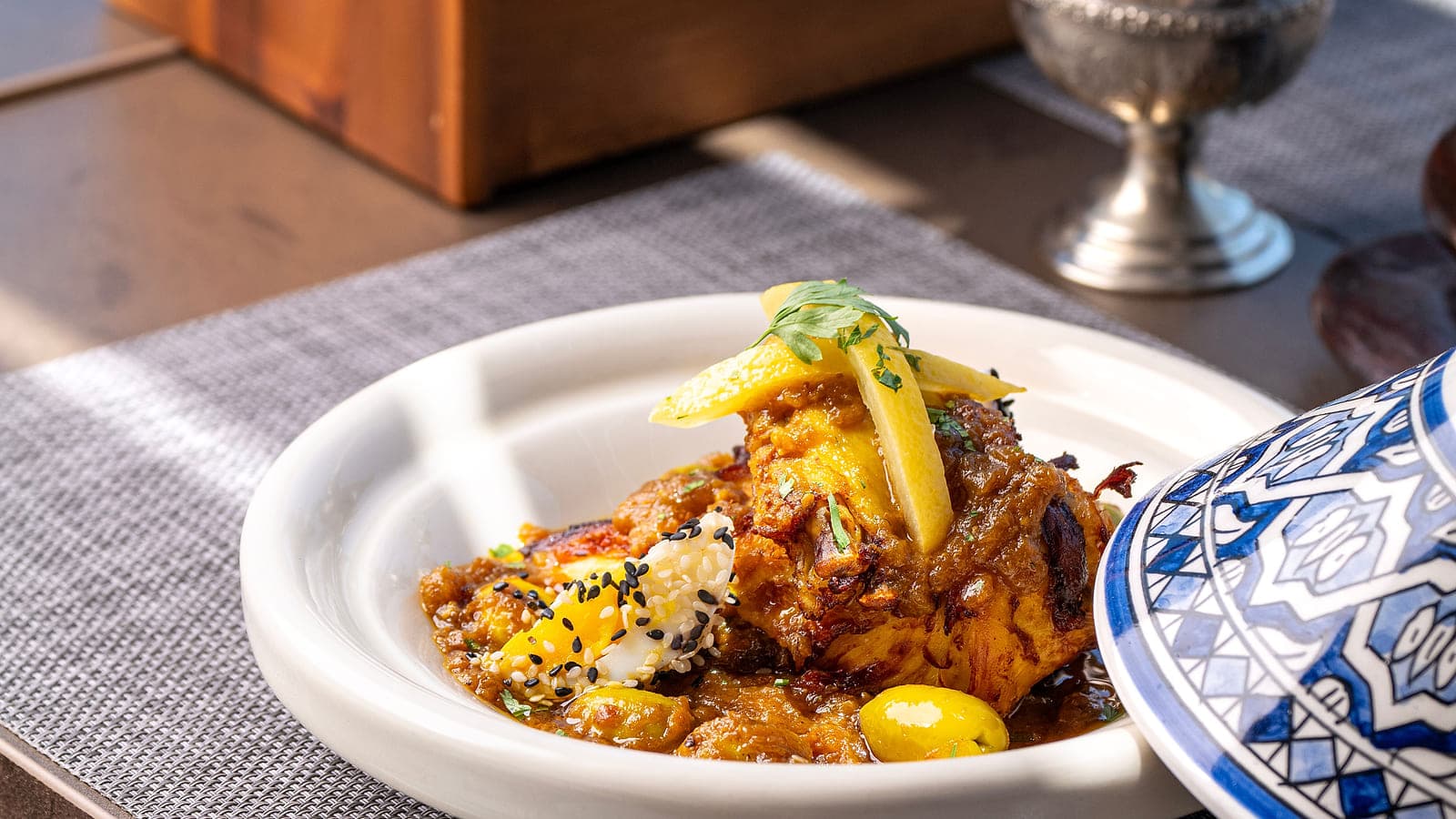
Moroccan Cuisine
What Makes Moroccan Cuisine Special?
Where Moroccan cooking came from, why sweet meets savoury so often, and the handful of techniques that shape almost every dish.

Guides
The Different Types of Moroccan Tagines
Mqalli, mhammer, mrouzia and the rest — the classic tagine styles, what separates them, and how to choose and use a clay tagine pot.